 how-to
How to Manage Multiple Daily Prescriptions: 2026 Guide
Table of Contents
- Step 1: Build a Complete and Current Medication List
- Step 2: Use Pill Organizers and Sorters for Daily Prescriptions
- Step 3: Set Up Medication Reminders and Tracking Tools
- Step 4: Consolidate Prescriptions and Explore Medication Synchronization Programs
- How to Prevent Medication Errors with Pharmacist Reviews
- Digital Medication Adherence Tools and Apps for Complex Regimens
- Managing Side Effects, Disposing of Unused Medications, and Caregiver Support
- Frequently Asked Questions
Last Updated: September 25, 2026
Step 1: Build a Complete and Current Medication List
A complete medication list is the foundation of safe daily prescriptions management. Write down every drug, vitamin, and supplement you take, including the dose and how often you take it.
Most people underestimate this step. A common mistake is listing only prescriptions and forgetting over-the-counter supplements, which can cause drug interactions.
Your list should include:
- Drug name and strength
- Dosage frequency and timing
- Prescribing physician
- Reason for taking it
- Any side effects you notice
Keep one copy at home and one in your wallet. Bring it to every appointment. This single habit prevents more medication errors than any gadget.
At Harpell Chemists, we treat this list as the starting point for every medication reconciliation review.
Step 2: Use Pill Organizers and Sorters for Daily Prescriptions
A pill organizer is a simple tray or box with labeled compartments that sorts daily prescriptions by day and time. It turns a confusing regimen into one glance.
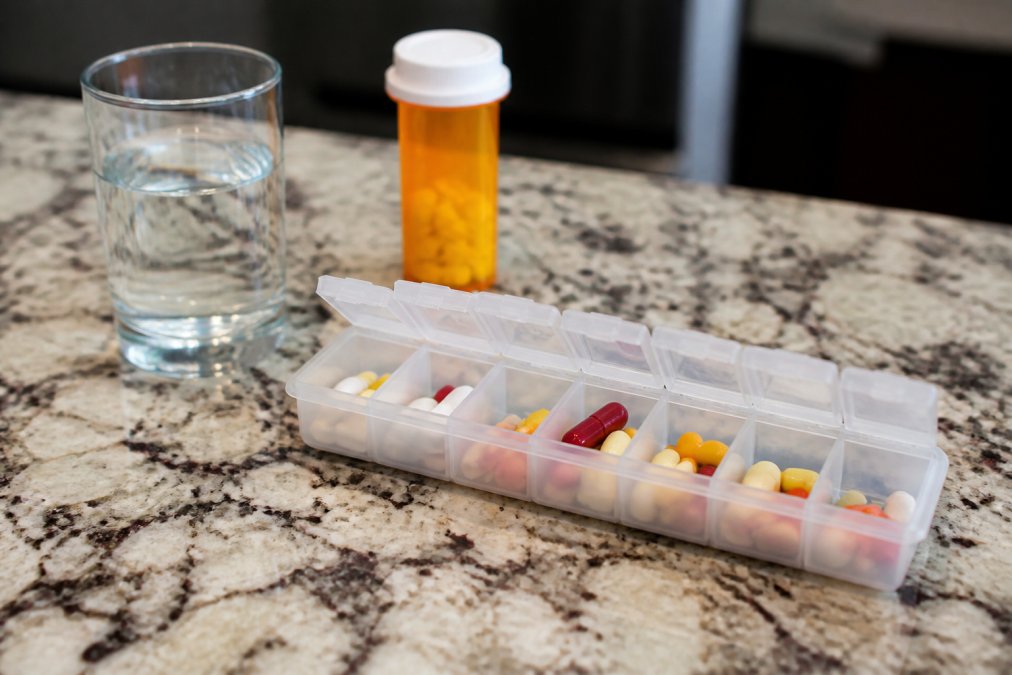
The organizer you choose should match your regimen's shape, not the other way around. Three common formats cover most situations:
- 7-day, once-daily tray. One compartment per day. Best for people taking everything at a single time each morning or evening. Cheapest and easiest to fill, but useless if your doses are split.
- 7-day, four-row tray (morning, noon, evening, bedtime). The most common format for multi-dose regimens. Each row holds one day's doses, so a missed row is visible at a glance.
- 28-compartment monthly tray. Four weeks in one unit. Fewer refill sessions, but a single mistake affects a whole month, and the tray is bulky to store and travel with.
Fill it once a week, on the same day, at the same time. Sunday evening works well for most people. Work from your medication list, not from memory, and fill one drug at a time across all compartments before opening the next bottle. This catches skipped compartments immediately. Then check each compartment before you take anything.
Sorters help, but they have limits:
- They do not track whether you actually took the dose
- They cannot flag drug interactions
- They do not travel well for long trips
- They offer no protection from heat, moisture, or light, which can degrade some drugs faster than the original pharmacy vial
- They are not child-resistant, so households with young children need a locked storage location
For complex regimens, a daily dispenser with date-and-time stamps removes the guesswork entirely. These units typically hold a 7- to 30-day supply in sealed, perforated packets or locked compartments, and some include a built-in alarm that sounds at each scheduled dose.
One more practical rule: keep the original labeled vials even after you sort. If a question comes up about a pill's appearance, the vial is the only place the drug name, strength, and lot number are printed together.
Step 3: Set Up Medication Reminders and Tracking Tools
A reminder system is any method that prompts you to take daily prescriptions on schedule. Phone alarms work, but they are easy to silence and forget.
Better options include:
- A pill dispenser with a built-in alarm
- A reminder app that logs each dose
- A text or call service from your pharmacy
- A paper chart on the fridge for caregivers to initial
Pair every reminder with a daily habit. Take your morning dose with coffee. Take your evening dose when you brush your teeth. This links medication to routines you never skip.
Step 4: Consolidate Prescriptions and Explore Medication Synchronization Programs
Pharmacy consolidation means filling all your prescriptions at one pharmacy. Medication synchronization programs then align refill dates so everything is ready on a single day each month.
Secure Your Spot — Enroll Today →
Why does this matter? Multiple pharmacies mean multiple records.
A synchronization program offers:
- One pickup date per month
- One pharmacist reviewing your full regimen
- Fewer trips and fewer chances to run out
- A clear medication list updated at every fill
| Problem | Fix | Impact |
|---|---|---|
| Multiple pharmacy records | Consolidate to one pharmacy | Full interaction review |
| Refills due on different days | Medication synchronization | One monthly pickup |
| Missed doses | Reminder system plus habit pairing | Steadier adherence |
| Confusing regimen | Pill organizer or dispenser | Fewer dosing errors |
How to Prevent Medication Errors with Pharmacist Reviews
A pharmacist review is a scheduled conversation where a licensed pharmacist checks your full regimen for problems. It is the single most effective way to prevent medication errors.
Book a medication reconciliation review when you:
- Start or stop any drug
- See a new prescribing physician
- Notice new side effects
- Return from a hospital stay
Digital Medication Adherence Tools and Apps for Complex Regimens
Digital adherence tools are apps and devices that track doses, send alerts, and share reports with family or caregivers. They suit complex regimens where paper charts fall short.
What to look for:
- Dose logging with timestamps
- Refill reminders tied to your supply
- A caregiver dashboard or shared access
- Exportable reports for your doctor
Managing Side Effects, Disposing of Unused Medications, and Caregiver Support
Side effects are the top reason people stop taking daily prescriptions without telling anyone. Never stop a medication on your own. Call your prescriber or pharmacist first.
Tracking side effects instead of guessing
The hard part with multiple prescriptions is attribution: when a new symptom appears, which drug caused it? A simple log answers that. For each new symptom, note the date it started, the time of day it appears, and whether it lines up with a recent dose change or a newly added drug. Bring that log to your next appointment.
Common side effects worth reporting:
- Dizziness or falls, especially on standing
- Stomach upset or appetite loss
- New rash, swelling, or itching
- Confusion, mood changes, or unusual sleepiness
- Bruising or bleeding that seems out of proportion
Safe disposal of expired or unused medications
For disposal, the U.S. Drug Enforcement Administration's drug disposal guidance advises using authorized take-back sites or mail-back programs. Flushing is only for a small list of specific drugs. Check the FDA's flush list before pouring anything down the drain.
A few practical points most guides skip:
- Take-back sites are often located at pharmacies, police stations, and some hospitals, and many accept medications year-round, not just on national take-back days.
- If no take-back option is nearby, most drugs can go in household trash after being mixed with something unpalatable (used coffee grounds or cat litter) and sealed in a container. Remove or scratch out personal information on the label first.
- Do not crush or dissolve pills before disposal unless the label instructs it.
- Check expiration dates at the same time you refill. Expired drugs lose potency and, for some, can become harmful.
Caregiver workflow for managing someone else's medications
For caregivers, the workflow matters more than the intent. The goal is a system that works even on a bad day, when you are tired, rushed, or not the person giving the dose.
- Review the medication list monthly, and after every hospital stay, ER visit, or specialist appointment
- Confirm refills before they run out, not the day they run out
- Watch for skipped or doubled doses, and note the pattern rather than the single event
- Attend one appointment per year with the prescriber, ideally the primary care visit
- Keep one pharmacy as the point of contact, and make sure the pharmacist knows you are the caregiver
- Store a current medication list where a first responder can find it, such as on the refrigerator or in a wallet card
Frequently Asked Questions
How can I manage taking multiple medications without getting confused?
Start by creating a complete medication list that includes each drug name, dose, and schedule. Use a pill organizer or a daily dispenser to pre-sort doses. Set phone alarms or use a medication reminder app. Keep all prescriptions at one pharmacy so a pharmacist can review for drug interactions. Ask your primary care provider or pharmacist to reconcile your list at every visit. These steps reduce confusion and help you stay on track with your daily prescriptions.
What are the risks of polypharmacy, and how can I prevent medication errors?
Polypharmacy increases the risk of adverse drug events, therapeutic duplication, and drug interactions. To prevent medication errors, review your full regimen with a pharmacist at least annually, use a single pharmacy for all prescriptions, and bring your medication list to every doctor visit. Never take over-the-counter supplements without checking for interactions. A pharmacist can identify duplicate therapies and recommend a safer dosage schedule. Always report new side effects promptly.
How do medication synchronization programs help with managing multiple daily prescriptions?
Medication synchronization programs align all your refill dates so you pick up every prescription on a single day each month. This reduces pharmacy trips, prevents gaps in therapy, and makes it easier to spot missed doses. Many pharmacies offer sync programs that coordinate with your prescribing physician. Combined with a pill organizer or a packaging service like MediPacket, synchronization simplifies your routine and supports better medication adherence.
Can a pharmacist really help me manage a complex medication regimen?
Yes. Pharmacists are trained in medication reconciliation, drug interactions, and therapeutic duplication. They can review your full list, including over-the-counter supplements, and flag potential problems. A pharmacist consultation can also simplify your dosage schedule, suggest a pill organizer or daily dispenser, and coordinate with your primary care provider. For added oversight, some services like MediPacket provide pharmacist-curated packaging with monthly verification calls to catch changes early.